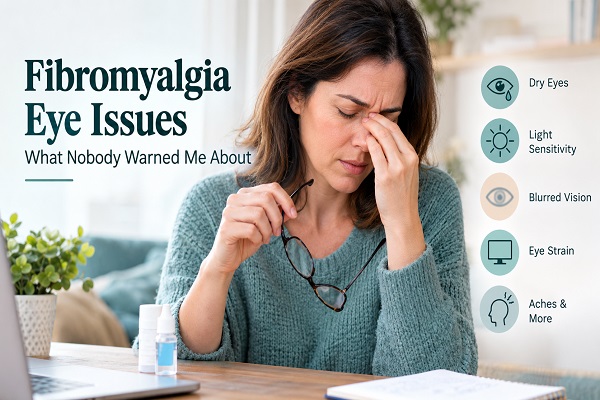
I remember sitting in my car in a parking lot, squinting at my phone screen like it had personally offended me, wondering why my eyes felt like they’d been rubbed with sandpaper. This was maybe two years after my fibromyalgia diagnosis, and I genuinely thought something new and separate was wrong with me. Turns out, fibromyalgia eye issues are way more common than doctors ever really prepare you for, and once I started digging into it (and talking to other people in fibro support groups), I realized I wasn’t imagining things at all.
If you’ve been dealing with dry, gritty, light-sensitive, or just plain “off” eyes along with your fibro symptoms, you’re not alone, and you’re not being dramatic. Let me walk you through what I’ve learned the hard way.
Wait, Fibromyalgia Affects the Eyes Too?
When I first got diagnosed, all anyone talked about was the muscle pain, the fatigue, and the brain fog. Nobody mentioned my eyes might join the party. But fibromyalgia eye issues showed up for me gradually — first as mild dryness, then as this weird blurry vision that would come and go, especially on high-pain days.
Here’s the thing I eventually figured out: fibromyalgia doesn’t just affect muscles and joints. It messes with your nervous system’s ability to regulate things, including tear production, light sensitivity, and even eye muscle coordination. Some researchers link this to something called dysautonomia, which is basically your autonomic nervous system not doing its job properly.
I’m not a doctor, so I’m not going to throw a bunch of medical jargon at you. What I can tell you is what actually happened to me and what helped.
My Personal List of Symptoms (Yours Might Differ)
Over the past few years, here’s what I’ve personally dealt with:
- Dry, gritty eyes that feel like they need constant blinking
- Sensitivity to bright light, especially fluorescent office lighting
- Blurry vision that comes and goes without warning
- Eye strain after just twenty minutes of screen time
- A weird ache behind my eyes during flare-ups
- Occasional double vision when I’m exhausted
Not everyone with fibro gets all of these, and severity varies a lot day to day. That inconsistency was honestly the most confusing part for me at first. One day my eyes felt fine, the next day I couldn’t look at my laptop without wincing.
The Mistake I Made for Way Too Long
For almost a year, I just assumed my eye problems were unrelated to my fibromyalgia. I blamed it on staring at screens too much for work, or getting older, or not sleeping enough. I bought random drugstore eye drops, tried different glasses, even got my prescription updated twice.
None of it fixed the underlying issue because I wasn’t treating the actual cause. It wasn’t until my rheumatologist casually mentioned that fibromyalgia eye issues are a documented thing that I connected the dots. That one conversation saved me a lot of wasted money and frustration.
Lesson learned: if you have fibro and your eyes are acting up, mention it to your doctor specifically. Don’t just assume it’s “normal aging” or screen fatigue. It might be connected to your condition, and that changes how you approach treatment.
What Actually Helped Me (Step by Step)
I’m going to walk you through what worked for me, in the order I tried things. This isn’t medical advice — just my own trial and error, shared in case it saves you some time.
Step 1: Get a proper eye exam first
Before assuming everything is fibro-related, get checked by an actual eye doctor. I found out I also had mild dry eye syndrome that needed its own treatment. Ruling out other causes first is important because fibromyalgia eye issues can overlap with completely separate eye conditions.
Step 2: Try preservative-free artificial tears
My optometrist recommended preservative-free drops like Refresh Optive or Systane Ultra. Regular drops with preservatives actually irritated my eyes more over time. I keep a small bottle in my bag and one on my desk now.
Step 3: Follow the 20-20-20 rule (seriously, it works)
Every 20 minutes, look at something 20 feet away for 20 seconds. I set a gentle timer on my phone using an app called Eye Care 20 20 20, and it genuinely reduced my eye strain within a couple of weeks. I was skeptical at first because it sounded too simple, but consistency made the difference.
Step 4: Adjust screen brightness and blue light settings
I switched on Night Shift on my iPhone and use f.lux on my laptop. Dimming the screen and warming the color temperature made a noticeable difference during flare-ups when light sensitivity was at its worst.
Step 5: Track your flares and eye symptoms together
I started using a symptom tracker app (I use Bearable, but there are several good ones) to log pain levels alongside eye symptoms. This helped me realize my eye issues almost always got worse during high-stress weeks or bad flare periods. That pattern alone helped me manage expectations instead of panicking every time my vision got blurry.
Step 6: Talk to your rheumatologist AND an ophthalmologist
This one’s important. Fibromyalgia eye issues sit in this weird gap between two specialties. Your rheumatologist manages the fibro side, but an eye doctor needs to rule out or treat anything eye-specific like dry eye disease, blepharitis, or light sensitivity disorders. Having both in the loop made my care so much more effective.
A Real Example From a Bad Flare Week
Last winter I had a rough flare that lasted about ten days. My eyes were so light-sensitive I had to wear sunglasses indoors, which felt ridiculous at the time. I also had this persistent ache behind my eyes that painkillers barely touched.
What helped was dimming every light in my house, wearing amber-tinted glasses in the evening, and giving myself permission to skip screens entirely for two days. It felt unproductive, but my eyes (and honestly my whole nervous system) needed the break. By day three, things started calming down.
I share this because sometimes the fix isn’t a product or a drop — it’s just rest and reducing sensory input until your body settles.
Common Mistakes People Make (I Made Most of These)
- Ignoring it because it seems minor. Eye symptoms often get dismissed compared to pain, but they genuinely affect quality of life.
- Overusing eye drops with preservatives. These can actually worsen dryness over time.
- Not telling your doctor specifically about eye symptoms. Doctors won’t always ask directly, so you have to bring it up.
- Pushing through screen time during flares. This just prolongs the strain and discomfort.
- Assuming new glasses will fix everything. Sometimes the issue isn’t your prescription at all.
When to Actually See a Professional
If you’re dealing with sudden vision loss, severe eye pain, or symptoms that come on very suddenly and intensely, please don’t just chalk it up to fibromyalgia eye issues without getting checked. Fibro can absolutely cause a lot of the milder, chronic stuff I described, but it shouldn’t be used as a blanket explanation for everything. When in doubt, get it looked at.
Final Thoughts
Living with fibromyalgia eye issues taught me that this condition really does touch parts of your body you’d never expect. I spent way too long treating my eyes as a separate, unrelated problem when really they were just another piece of the same puzzle.
If you’re going through something similar, know that you’re not overreacting, and you’re definitely not alone. Small adjustments — proper eye exams, the right drops, screen breaks, and open conversations with your medical team — genuinely add up over time. It won’t fix everything overnight, but it makes the day-to-day a lot more manageable.
This article is based on personal experience and is not a substitute for professional medical advice. If you’re experiencing new or worsening eye symptoms, please consult a qualified healthcare provider.